
You have watched it happen for years. A little more goes each winter. You have been told to armor the toe, or to plant something, or that there is nothing to be done and one day the house will have to go.
There is usually a fourth option, and most people never hear it.
Move the house back.
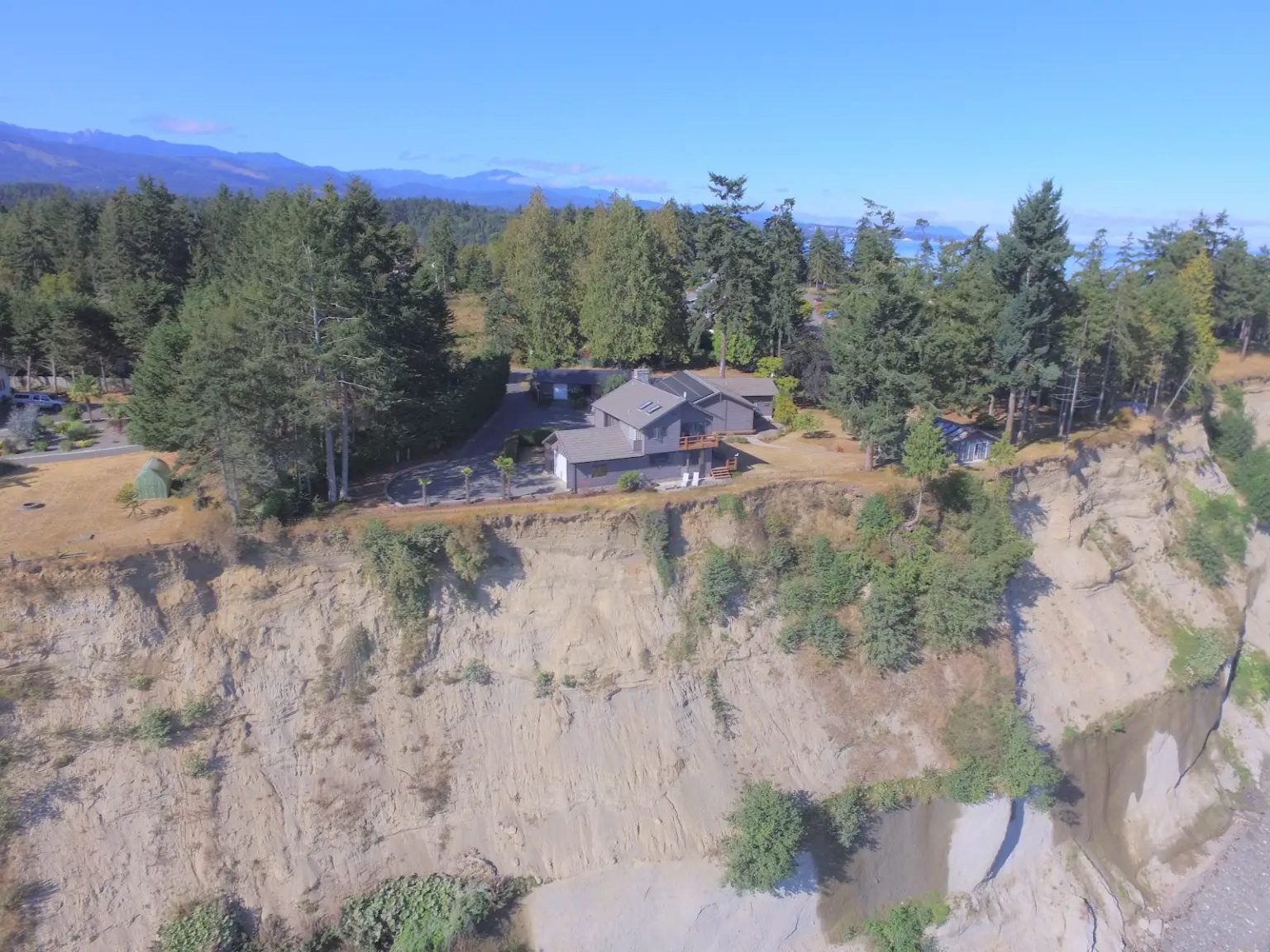
Your actual options, including the ones that do not work
Do nothing
The bluff continues to retreat. At some point the distance between the edge and the foundation closes, and the structure is lost — and with it, the buildable use of the most valuable land you own.
Stabilize the bluff
Armoring, drainage, revegetation. Increasingly difficult to permit on marine shorelines, and on an actively retreating high bank it frequently postpones rather than resolves. Worth investigating. Worth being realistic about.
Move the house back
On a large enough parcel — and most high-bank waterfront lots on this coast are large enough — the structure can be lifted, carried back from the edge, and set on a new foundation. Same land. Same view. Same address.
Sell
A house on a failing bluff is close to unsaleable to a buyer who believes it is doomed. To a buyer who knows it can be moved, it is a discount. Which of those two people you meet depends on whether anyone knows relocation is possible.
How much time does moving it actually buy
Enough to change the question entirely.
On a recent Peninsula relocation, the project’s geotechnical engineers measured it precisely: at the setback the new foundation was moved to, the bluff’s recession rate gives the structure a life expectancy of well over 75 years — not the few years most owners assume.
That is the number that matters, because the question every owner is really asking is not whether it can be moved. It is whether they are solving this or just delaying it. Decades is not a delay.
The part nobody tells you
The land is worth more than the house.
On waterfront, almost always, and usually by a wide margin. Which means the decision in front of you is not whether an old house is worth spending money on. It is whether the parcel stays usable. Framed correctly, that arithmetic is rarely close.
What permitting actually looks like
Relocating a structure on marine shoreline falls under the state Shoreline Management Act, and the county administers it. Two things are worth knowing before you plan anything around a schedule.
Moving a structure is not among the activities the state exempts from a shoreline substantial development permit. Normal maintenance and repair of an existing structure are exempt; relocation is not on that list. The working assumption for a shoreline relocation is therefore that a permit is required, and the calendar has to be built around it.
And even where an activity is exempt, Clallam County requires a written statement of exemption from the Administrator before the work begins. Exempt does not mean proceed. It means a different piece of paper.
What applies to your parcel depends on where your shoreline designation falls, what critical areas are mapped on it, and what the county sees when it looks. That is a question for the county, and it is worth asking early — the answer sometimes changes which of the four options above is realistic.
The part that is genuinely urgent
Not urgent in the sense that we would like you to hurry. Urgent in the sense that the option has an expiry date.
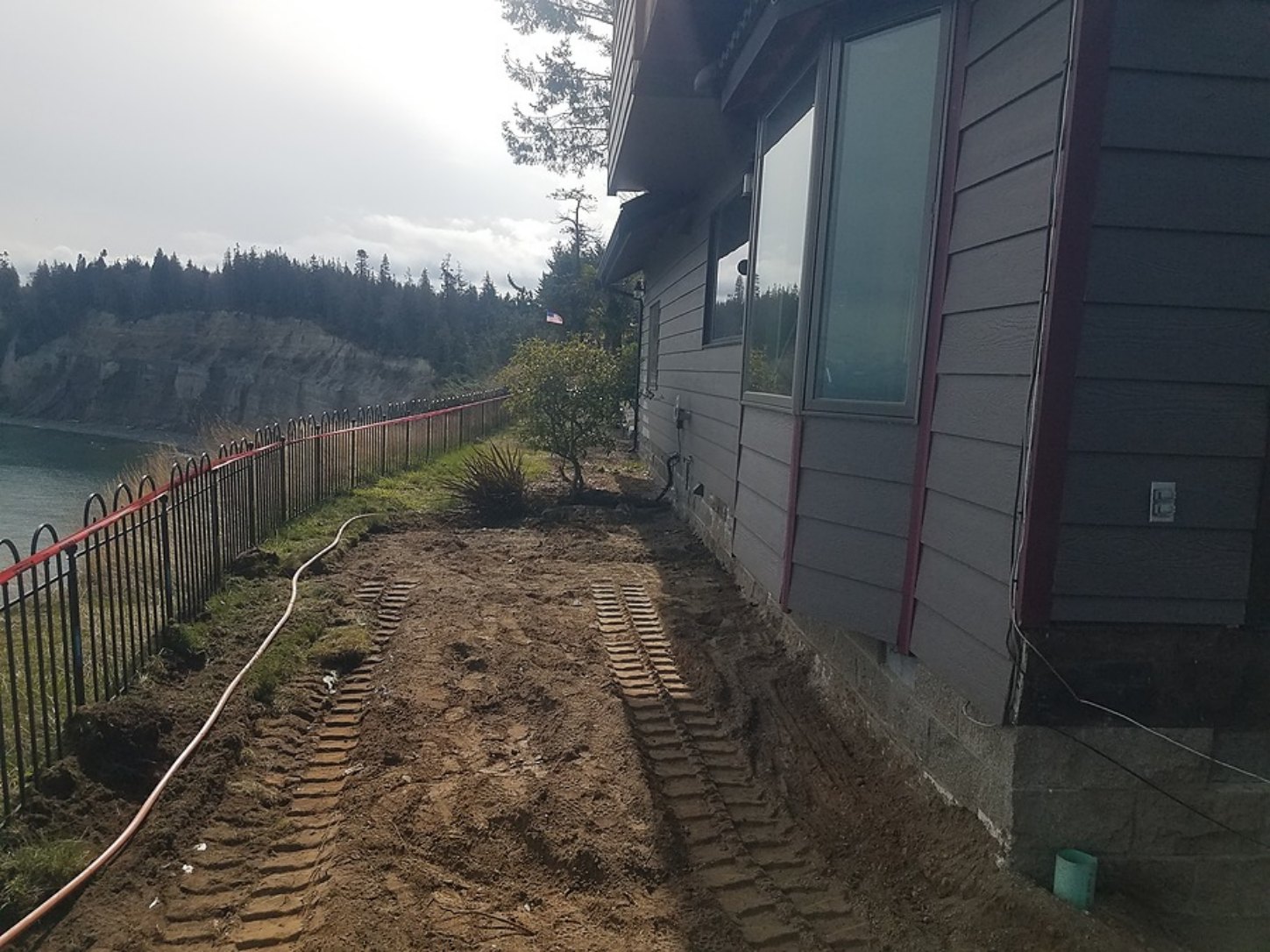
There is a point at which the remaining distance between the edge and the house is no longer enough to move it back into, or the ground between them will no longer carry the load. Before that point, this is a solvable problem. After it, it is not, and no amount of money changes that.
If you are unsure which side of that line you are on, that is exactly the question worth asking early.