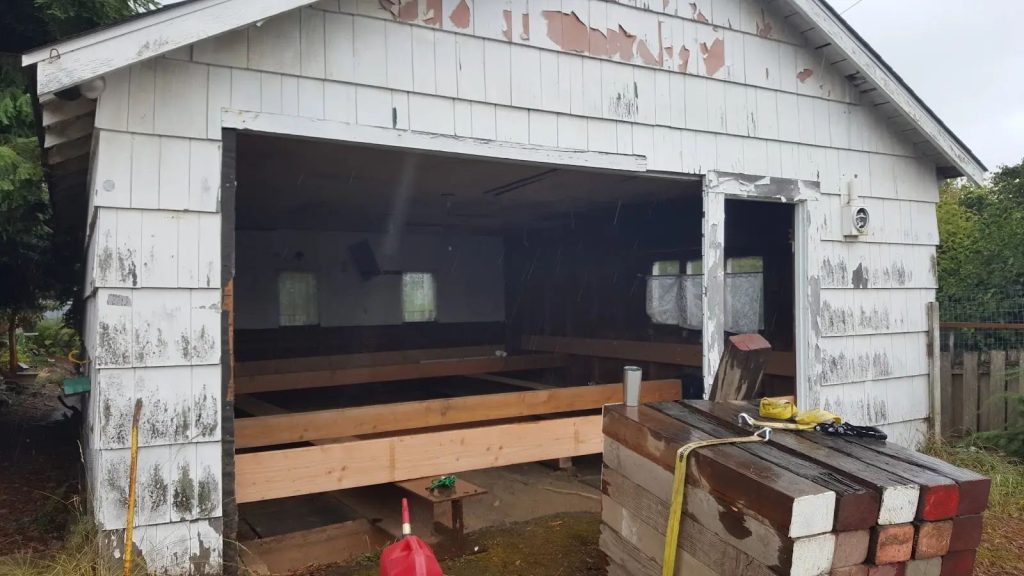
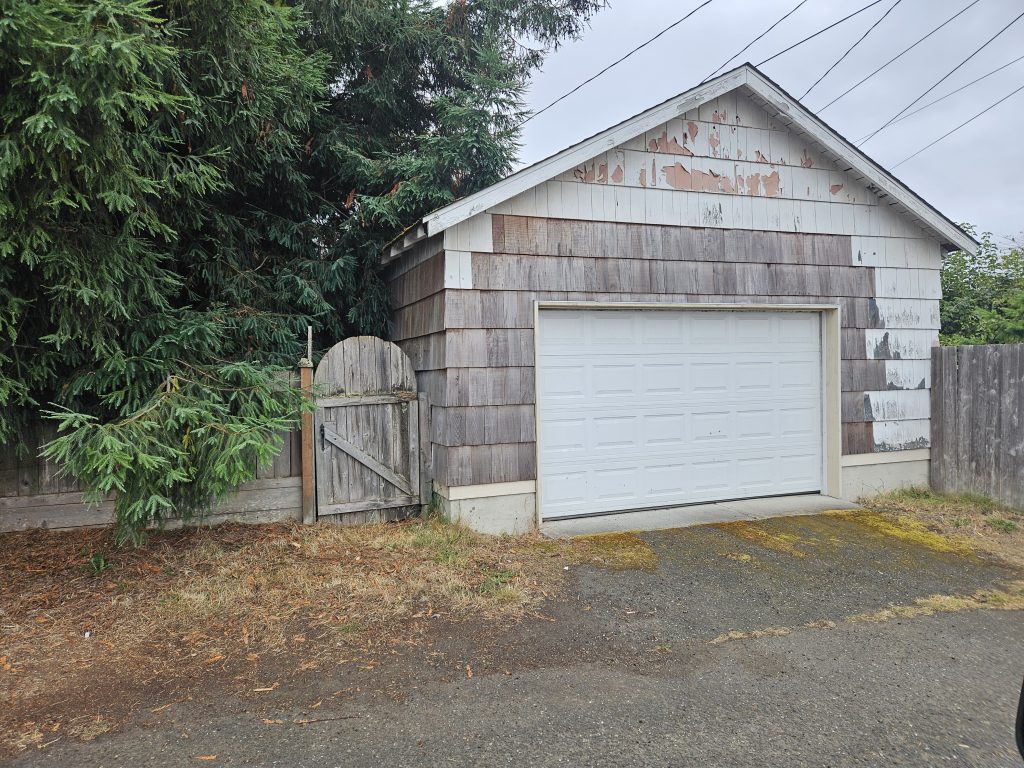
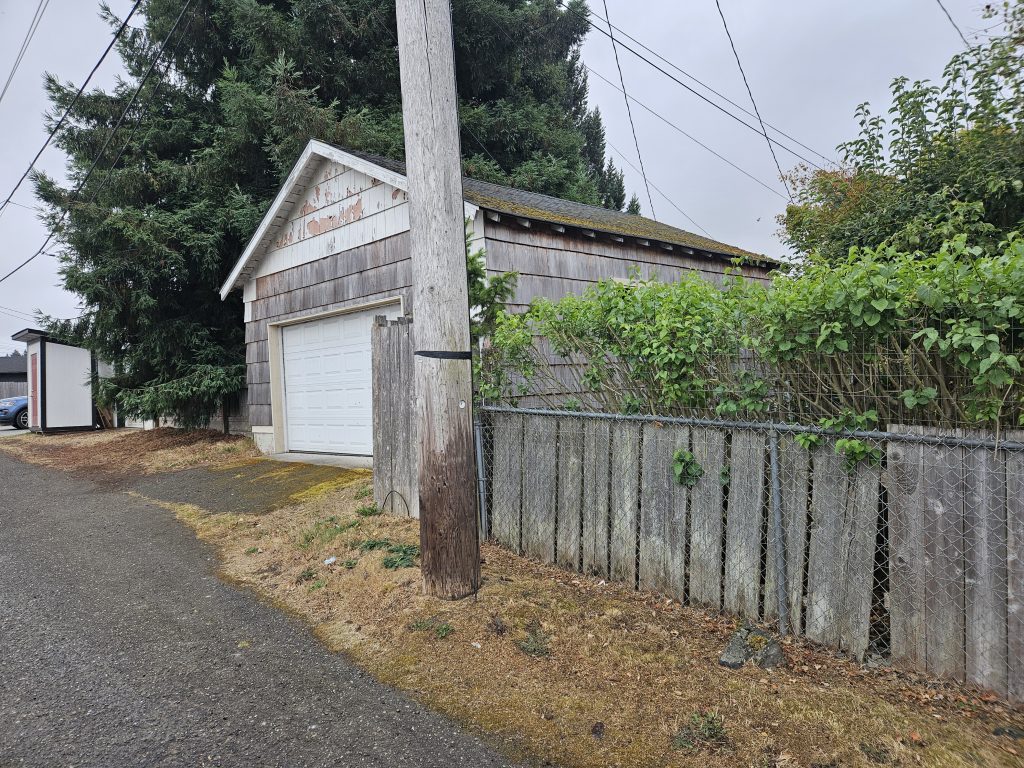
There is a garage in Port Angeles that sits about two feet off the alley. City setbacks dictate that nothing built today could sit there.
But it was built in the 1920s, before the rules that would forbid it, and so it is allowed to remain — grandfathered, legally non-conforming, permitted to stand precisely where it stands.
Its owner wanted to replace it. The City said no. Tear it down and the right to be two feet off that alley goes with it.
So we did not tear it down.
What we did instead
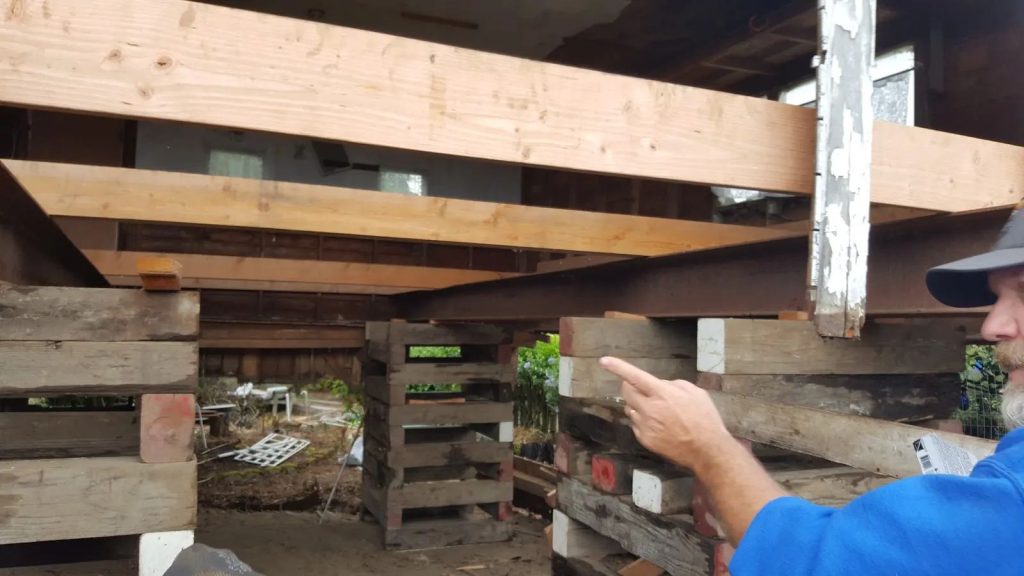
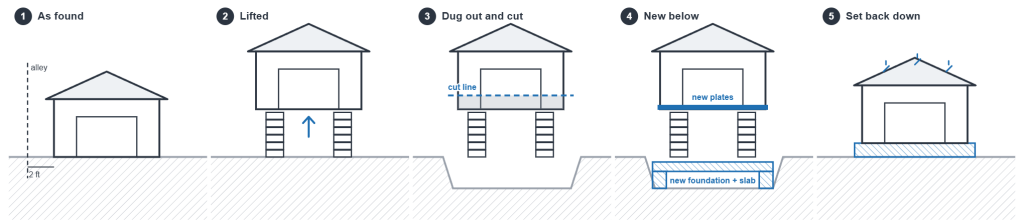
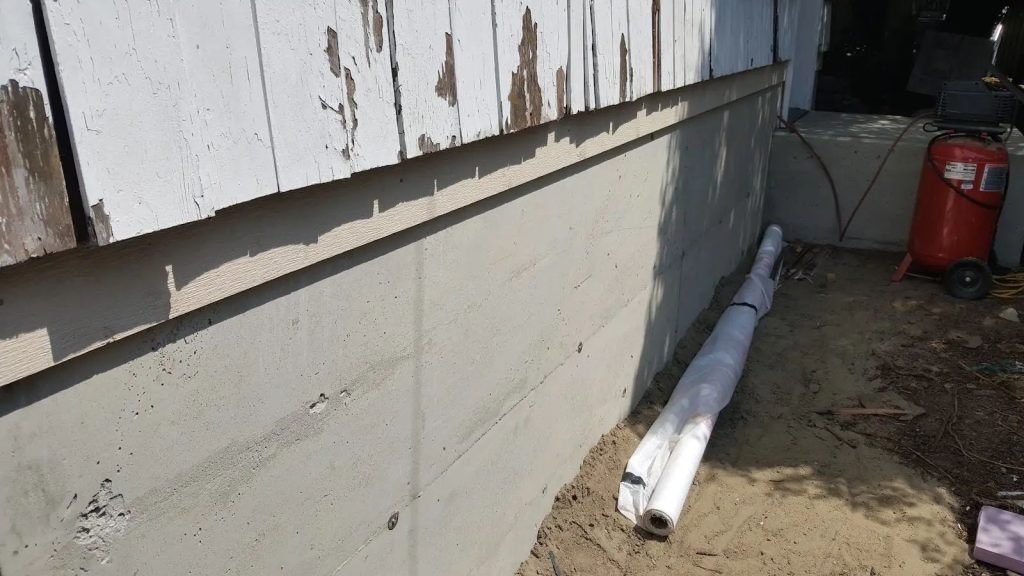
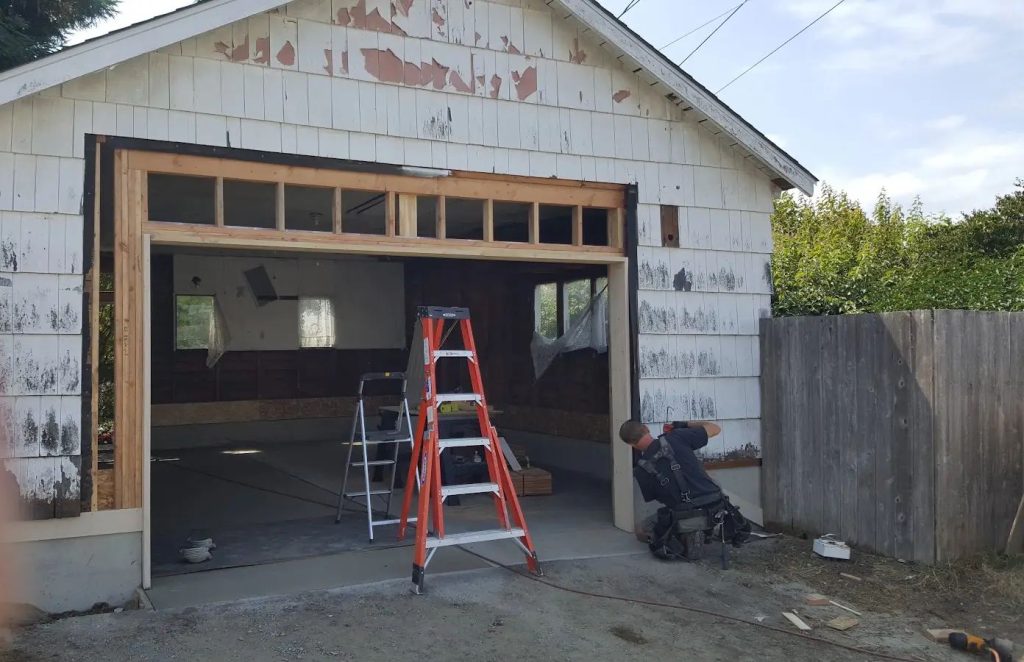
The building was lifted. The ground beneath it was dug out. The rotten wood base was cut from the bottom of the structure, all new plates were framed, and a proper foundation and slab were poured underneath. Then it was set back down.
The siding and roof were repaired afterward.
The result is a garage that is, in every practical sense, new — on a new foundation, on a new slab, on new plates — standing exactly where a new garage could not legally be built. Because it is not a new garage. It is the same building, repaired.
This is a legitimate path, not a trick
Worth being clear about. Repair and replacement are treated differently by code for sound reasons, the work was permitted, and it was done in the open. Nothing here is a loophole.
What it is, is a path most owners never learn exists. They ask at the counter, hear no, and conclude the building is a write-off.
Why the timing is not negotiable
The grandfathering attaches to the standing building.
Let it collapse — or deteriorate past the point where it can honestly be called repairable — and the legal right to occupy that spot goes with it, permanently.
That garage was perhaps one hard winter from being a patch of ground where nothing can ever be built two feet off the alley again.
Every town on the Peninsula has buildings in exactly that condition, with owners who have quietly accepted they will lose them. Most of them still have time. Not all of them will next year.
If you have a structure like this, the useful question is not what it would cost to replace. It is whether it is still repairable — and that is a question with a deadline attached.